
Source: https://thesaigontimes.vn/
Huynh The Du - Nguyen Xuan Thanh*
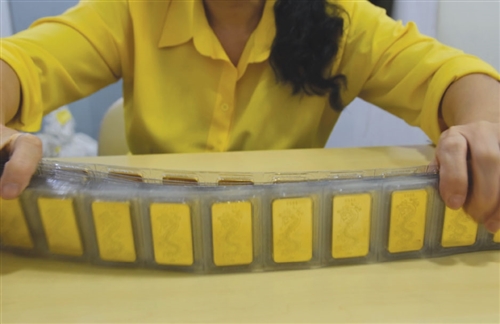
(KTSG) – We estimate that by the end of 2023, there will be about 2,000 tons of gold in the Vietnamese economy. This figure is much higher than the level often used in exchanges. However, comparing (per capita gold and share of GDP) with regional economies with similar characteristics; and the market value of domestic financial and real estate assets, there are no unusual signs of gold in Vietnam. Gold accounts for a moderate proportion (which can be said to be natural and reasonable) in the people's asset holding portfolio.In addition, similar to many other countries, most of the gold in Vietnam is stored by households and used for jewelry. This amount of gold will last forever and it would be impractical to use any tool to mobilize a significant portion of it for other uses. No country in the world has done that.
The scale of gold in the Vietnamese economy
On average, each Vietnamese person owns nearly 5.5 taels of gold, equivalent to 33 million VND, equivalent to a motorbike in the lowest priced group on the market today. In addition, the total amount of gold consumed in 2023 is 55 tons, worth nearly 3.5 billion USD, lower than the total consumption for mobile phone purchases for the whole year (estimated at about 4 billion USD).
It is estimated that the amount spent on gold imports from 1990 to the end of 2023 is about 65 billion USD. Based on the gold price at the end of 2023, the value of 2,000 tons of gold is 133 billion USD. If all the foreign currency used to import gold were invested in 20-year US government bonds (considered a stable and high-yielding investment among national reserve options), the value of Vietnam's economic assets by the end of 2023 would be much lower than $132 billion. The habit of holding gold has significantly increased the accumulated value compared to relying solely on foreign exchange reserves.

The amount of gold accumulated in the Vietnamese economy and its value relative to GDP are shown in Figure 1. The value of gold in the Vietnamese economy in 2023 is equivalent to 32% of GDP, less than half of the peak of 72% in 1991, significantly lower than the second peak in 2009 (44%) and significantly higher than the lowest level in 2000 (20%). Vietnam's level is higher than the world's 13.4%, but not unusual. For example, the estimated figure in 2023 for India is more than 50%, and for China is nearly 11%. The reason is that China's GDP/capita is three times that of Vietnam, so the ratio is only one-third, while India's GDP/capita is only about 61% of Vietnam's, while the average amount of gold/capita in the three countries is similar.
By the end of 2023, total deposits in the economy will be 126% of GDP, the stock market value will be 55% of GDP, the bond market value (government + corporate) will be 34% of GDP, and the insurance market value will be 8.5% of GDP. Since there are no official estimates, we conservatively assume that the value of real estate in Vietnam compared to GDP is half the global average of 200% (Savills's calculation in 2022 is approximately 400%).
Thus, gold accounts for about 12.5% in the gold + savings + stocks + bonds + insurance portfolio); and 7% in the above portfolio + real estate (Figure 2). If other types of assets such as cryptocurrencies are included, the gold ratio will be significantly lower.
Estimating the amount of gold in Vietnam by comparison with other countries in the region
The popularity of gold is evident in Asia, where 13 economies (China, Hong Kong, India, Indonesia, Japan, South Korea, Malaysia, Pakistan, Singapore, Sri Lanka, Taiwan, Thailand and Vietnam) account for 62% of the world's gold consumption from 2010-2023.

Figure 3 shows the average gold consumption per capita of 10 economies in 2012, the average period 2012-2023 and 2023. There is nothing unusual about Vietnam's position. Despite fluctuations related to macroeconomic instability, Vietnam ranked 4th in 2011 (peak of macroeconomic instability), 2012 (year of Decree 24) and 2022. On average, Vietnam ranked 6th in 2012-2023. Notably, Hong Kong, Thailand and Vietnam have decreased significantly, of which Vietnam has seen a significant increase in gold consumption since 2022, so the position returned to 4th and dropped to 5th in 2023. Above Vietnam in 2023 are still the three larger economies from a decade earlier, namely Hong Kong, Singapore and Thailand plus China.

On average, in the period 2012-2023, Vietnam's annual per capita gold consumption is 0.66 grams, slightly lower than China's 0.67 grams and higher than India's 0.57 grams. The figures for Vietnam and China are equivalent to the average of seven economies in the region with large gold consumption: India, Taiwan, South Korea, Malaysia, Thailand, China and Vietnam.
In 2023, Vietnam's per capita consumption was 0.55 grams, at the average level of regional economies such as China (0.64 grams), Thailand (0.6 grams), South Korea (0.53 grams), India (0.52 grams), Malaysia, (0.5 grams), Sri Lanka (0.47 grams), and Taiwan (0.47 grams).
The history of each economy has its own ups and downs. However, there is no evidence that the per capita gold in the Vietnamese economy is different from other economies. It is possible to infer the amount of gold in the Vietnamese economy from data from India and China.
The data in Table 1 show that by the end of 2023, the per capita gold in China and India was 20.31 grams and 20.05 grams, respectively. Thus, it is highly likely that the per capita gold in Vietnam is around 20 grams. With a population of 100 million people by the end of 2023, the total amount of gold in Vietnam's economy is 2,000 tons.
The estimated amount of gold in Vietnam currently accounts for nearly 1% of the total amount of gold in the world (212,000 tons). With a population of 1.23% of the world, the average amount of gold per capita in Vietnam is lower than the world average.
Estimated based on the amount of gold in Vietnam according to available statistics
According to the definition of the World Gold Council (WGC), consumption is the total consumption of jewelry and the total investment in gold bars and coins occurring in a country. According to WGC statistics, in the period 1990-2023, Vietnam consumed 2,027 tons of gold.
According to the Complete Party Documents, volume 50, it is estimated that in 1990, Ho Chi Minh City had 6-10 million taels of gold. Assuming conservatively that in 1990, Ho Chi Minh City accounted for 6.2% of the country's population, but accounted for two-thirds of the total gold. Thus, at that time, Vietnam had between 330-550 tons of gold.

Synthesizing the two figures above, the amount of gold in the Vietnamese economy by the end of 2023 is 2,356-2,576 tons.
Calculating from data from the General Department of Customs and the State Bank, from 1998 to November 2023, Vietnam exported gold, silver, jewelry, and precious stones equivalent to 577 tons of gold, equal to 32.2% of the amount of gold consumed according to WGC statistics in the same period. Assuming conservatively that about 32.2% of the amount of gold consumed in Vietnam according to WGC statistics was taken out of Vietnam, the amount of gold in the Vietnamese economy by the end of 2023 is from 1,704-1,924 tons.
The value of gold, silver, jewelry, and precious stones exported from 2011-2023 is equivalent to 211 tons of gold, equal to 25% of the total amount of gold consumed in Vietnam according to WGC data. However, most of it is jewelry which is more valuable than pure gold. In addition, there are other products. According to the Vietnam Gold Trading Association's estimate, the amount of gold raw materials for jewelry exported from 2012-2023 is about 80 tons, equivalent to about 10% of the total gold consumption estimated by the WGC. Assuming that the amount of gold flowing out of Vietnam is 25% of the estimated consumption by the WGC, the amount of gold in the Vietnamese economy by the end of 2023 is from 1,850-2,070 tons.
Thus, the amount of gold in the Vietnamese economy with the above estimates ranges from 1,704-2,576 tons. However, the possibility of convergence around 2,000 tons as compared to the above Asian economies.
* Lecturer in Public Policy, Fulbright School of Public Policy and Management, Fulbright University Vietnam
Related Articles
Managing and regulating the gold market in Vietnam: What issues need to be considered?

Expert Nguyen Xuan Thanh: There is still a probability that monetary policy will reverse in 2024