
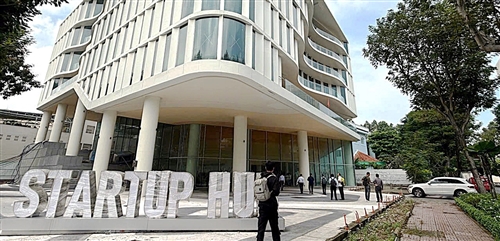
Source: tuoitre.vn
The movement of migrant labor, especially low-skilled workers, to other provinces presents an opportunity for Ho Chi Minh City to attract high-tech industries. However, whether this opportunity is utilized or not depends on the preparation made from now.
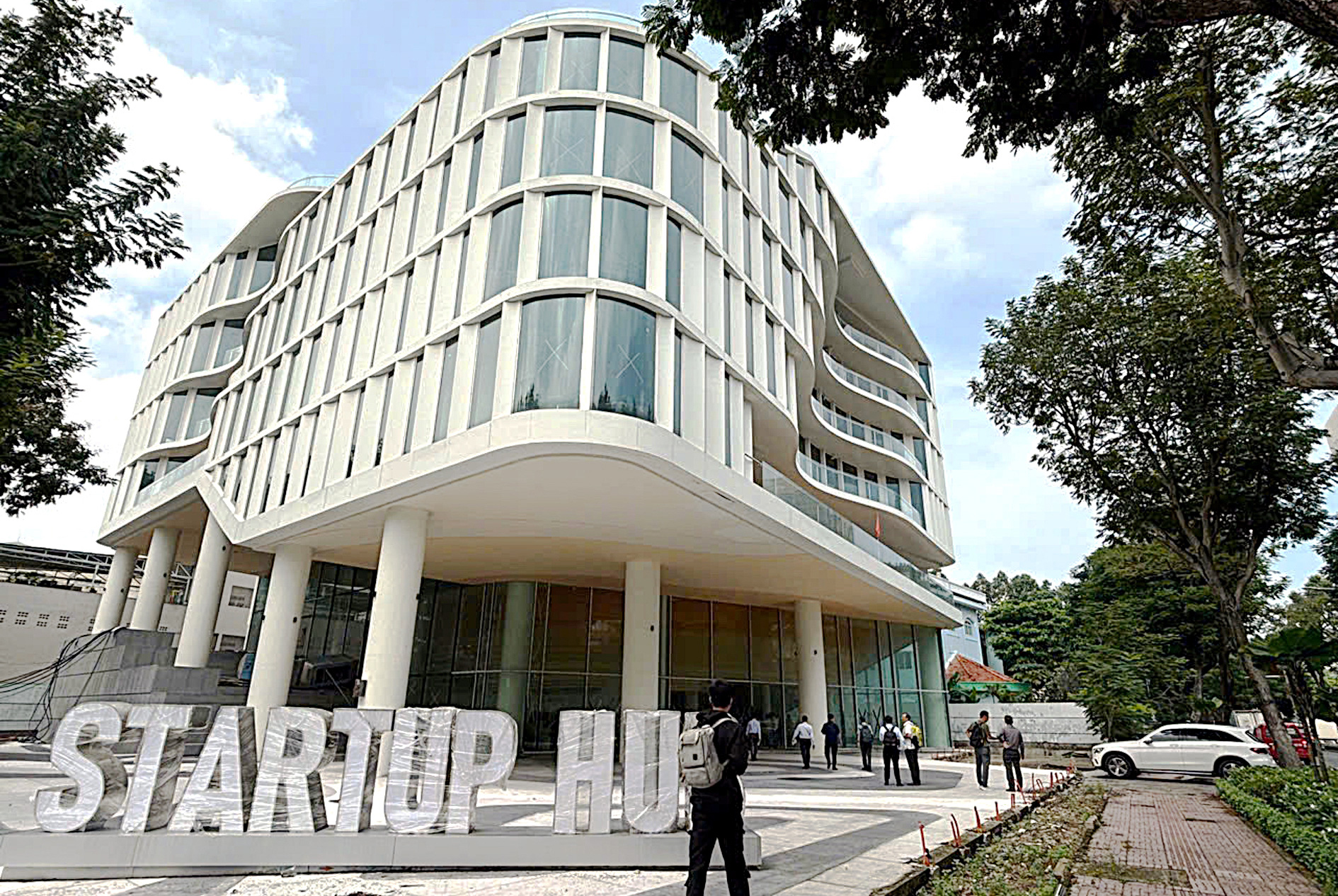
The Ho Chi Minh City Innovation Startup Center (District 3) is being completed in preparation for its opening. Image: VŨ THỦY
Dr. Phạm Văn Đại, a public policy lecturer at the Fulbright School of Public Policy and Management, Fulbright University Vietnam, made this remark.
In line with the trend of the urban efficiency problem
What is your perspective on the sharp decline in migration to Ho Chi Minh City?
- Ho Chi Minh City currently has over 10 million people, which is a large population compared to other cities in Southeast Asia and Asia. Experience from other cities shows that this population size has reached a threshold, making it difficult for the population to grow significantly further.
Before the COVID-19 pandemic, the population growth rate of Ho Chi Minh City had already decreased compared to previous periods. This issue only received more attention after the pandemic. Along with the decline in orders, economic recession, and strong competition from other regions, the city is no longer attractive for low-skill, low-productivity industries.
So, is this an inevitable trend, sir?
- This is a matter of urban efficiency. A population that is too small or too large is inefficient. Experience shows that a population under 10 million is the optimal size for a city. If it exceeds this number, the city must significantly upgrade its infrastructure.
An overly large city increases production and living costs, and the city loses its competitive advantage in attracting low-skilled labor and simple industries.
For example, cities like Tokyo (Japan) and Shanghai (China), with higher development levels and better infrastructure, can support larger populations. Meanwhile, cities like Bangkok, Jakarta, Kuala Lumpur, and Ho Chi Minh City, with less developed infrastructure, have already exceeded the optimal population threshold of 10 million.
Of course, Ho Chi Minh City must recognize that the exit of low-skilled industries will create opportunities and space for higher technology and advanced industries to fill the gap. However, transitioning to this shift is not something that can be achieved overnight.
Building Industry Clusters and Strategic Business Forces
Could you elaborate on what you mean by "not easy"?
- In the past, industries like textiles, footwear, and wood processing developed very quickly. However, developing high-tech industries is not something that can be done at the last minute. It requires 5 to 7 years of consistent preparation. This is the time to ask that question.
The speed and success of the transition depend on the policies set by the city.
So, what does Ho Chi Minh City need to prepare to seize the opportunity?
- Currently, Ho Chi Minh City does not have any strategic businesses, only small businesses, and large businesses are foreign direct investment (FDI) companies. First, to transition, Ho Chi Minh City must build strategic industry clusters and strategic businesses, then move on to long-term investment policies such as science, education, and high-quality human resources.
These efforts must have a long-term strategy, developed steadily, step by step, continuously, and consistently. It's not something that can improve infrastructure and high-quality human resources overnight.
Could you provide an example of the consequences of not preparing these things?
- 40 years ago, Busan was the largest port city in South Korea, with the second-highest per capita income (after Seoul) and strong urbanization, similar to what Ho Chi Minh City is experiencing today. However, they struggled to solve the issue when simple industries and low-skilled labor moved to other provinces.
Failing to create high-productivity industries led to Busan's per capita income now being among the bottom 3-4 poorest provinces in South Korea. This is a risk we cannot ignore, and it serves as a lesson for Ho Chi Minh City.
- Tiến Long
Related Articles

Expert Nguyễn Xuân Thành: In 2025, public investment will be accelerated, and GDP could grow by over 7%.

The 2024 Nobel Prize in Economics and Institutional Lessons for Vietnam