Source: vietnamnet.vn
Dr. Vu Thanh Tu Anh states:
Vietnam has never experienced such significant internal and external turbulence as in recent times. Domestically, we have completed a series of key leadership appointments and implemented a revolution in streamlining the apparatus of the Party, Government, and National Assembly towards centralization and power consolidation. This reform is being carried out decisively and rapidly, with a clear roadmap, unprecedented in the past several decades.
Externally, Vietnam faces a situation full of opportunities but also fraught with risks.
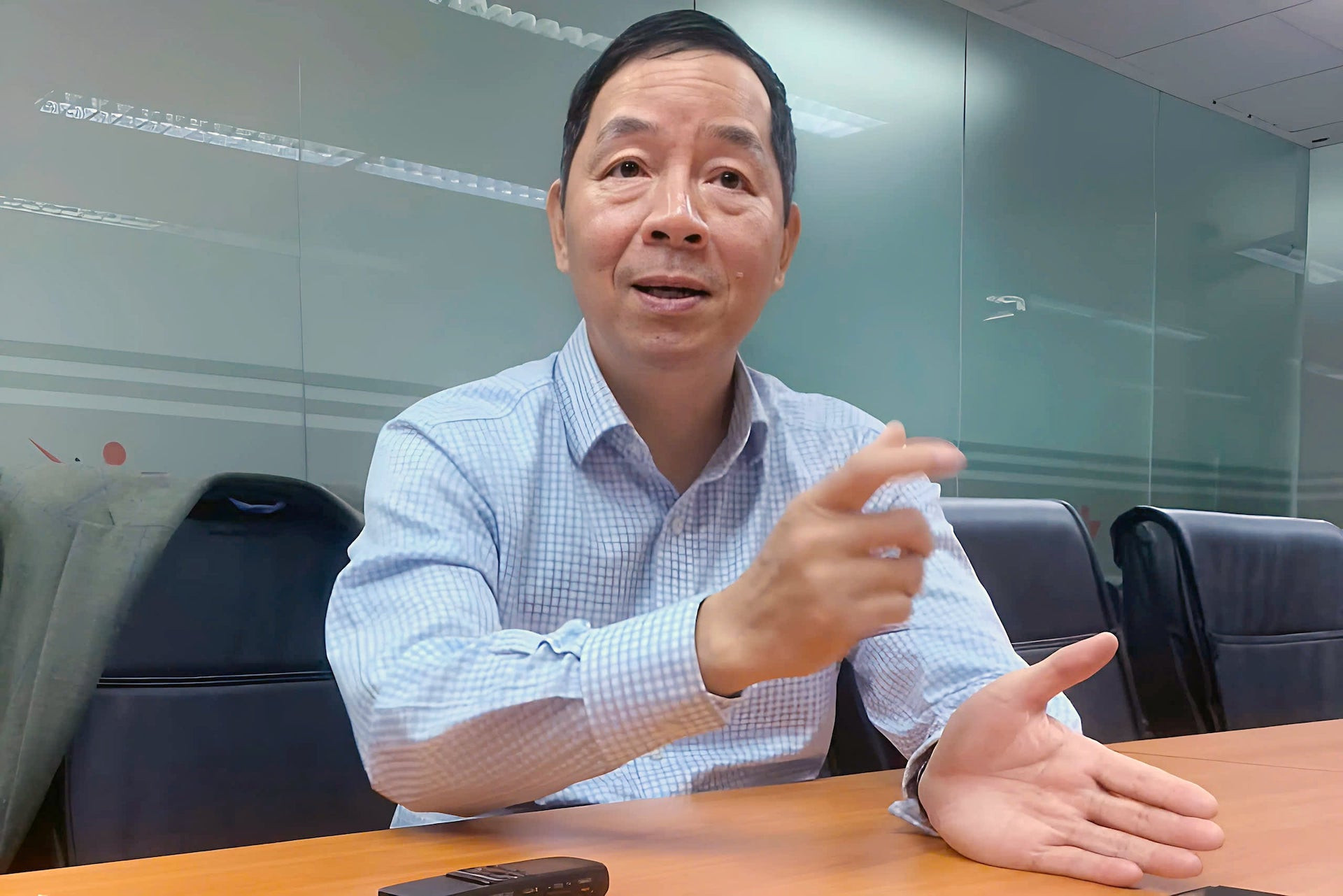
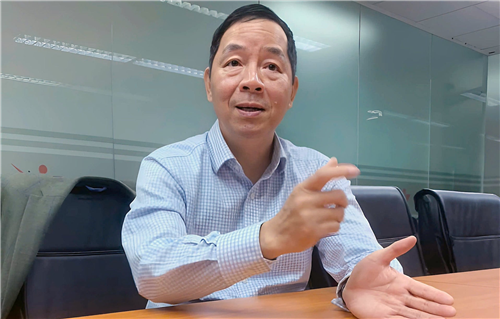
Dr. Vũ Thành Tự Anh: The three pillars of foreign policy—diplomacy, trade, and security—are extremely important. Image: VietNamNet
What are the opportunities? Vietnam occupies a strategic geographical position, a natural advantage, and is at the center of global attention. For example, in trade, Vietnam increasingly depends on imports from China and exports to the U.S. In 2024, China was Vietnam's largest import market, with a turnover exceeding $144 billion, while the U.S. was Vietnam's largest export market, with a turnover close to $120 billion. Additionally, Vietnam is becoming increasingly reliant on technology and foreign direct investment (FDI).
This interdependent relationship, balancing the interests of different countries and partners, has kept Vietnam in a special and important position.
The issue is that opportunity always comes with risks, and the transition from opportunity to risk is a fine line. Given this reality, Vietnam's opportunities and future largely depend on foreign policy in three areas: diplomacy, international trade, investment, and security. These three pillars must work together in harmony. I believe that foreign affairs have never been as important as they are now.
Building "Strategic Trust" with the U.S.
Can you analyze further the relationship between Vietnam and the United States, our comprehensive strategic partner?
Dr. Vu Thanh Tu Anh: There are many aspects to consider, but I will highlight a few points.
Last September, when President Biden visited, we all spoke about the opportunities for semiconductor and AI development. Biden's policy was offshoring, which presented an opportunity for Vietnam.
But now, with President Trump, the focus will shift to reshoring, emphasizing domestic development, which is the opposite of Biden's policy. Opportunities in green transformation and technology transfer will return to the U.S.
So, are our opportunities still as clear? No one can be sure. What we hoped for and placed our trust in—the new growth drivers—are now facing such risks.
If Vietnam is again placed on the currency manipulation list, as was done during Trump's previous term, all our opportunities could turn into risks.
|
"Exports are a critical pillar, so if Vietnam is accused of currency manipulation and not recognized as a market economy, we will immediately find ourselves at a disadvantage." Vu Thanh Tu Anh |
Therefore, as I've said, the three foreign policy pillars—diplomacy, trade, and security—are extremely important. If these pillars are not solid, no matter how well we prepare internally, we may not succeed.
How do we solve this crucial issue for Vietnam's economy at least for the next 4-5 years? Unfortunately, I have not seen much discussion on this matter.
Ensuring Transparency in Exports to the U.S.
What should we do and how can we achieve the recognition of market economy status, which is still pending?
Dr. Vu Thanh Tu Anh: I’ve observed that in all high-level meetings between Vietnamese leaders and U.S. leaders, Vietnam has always requested the U.S. to recognize Vietnam's market economy status. To achieve this, I believe we must take actions on our part.
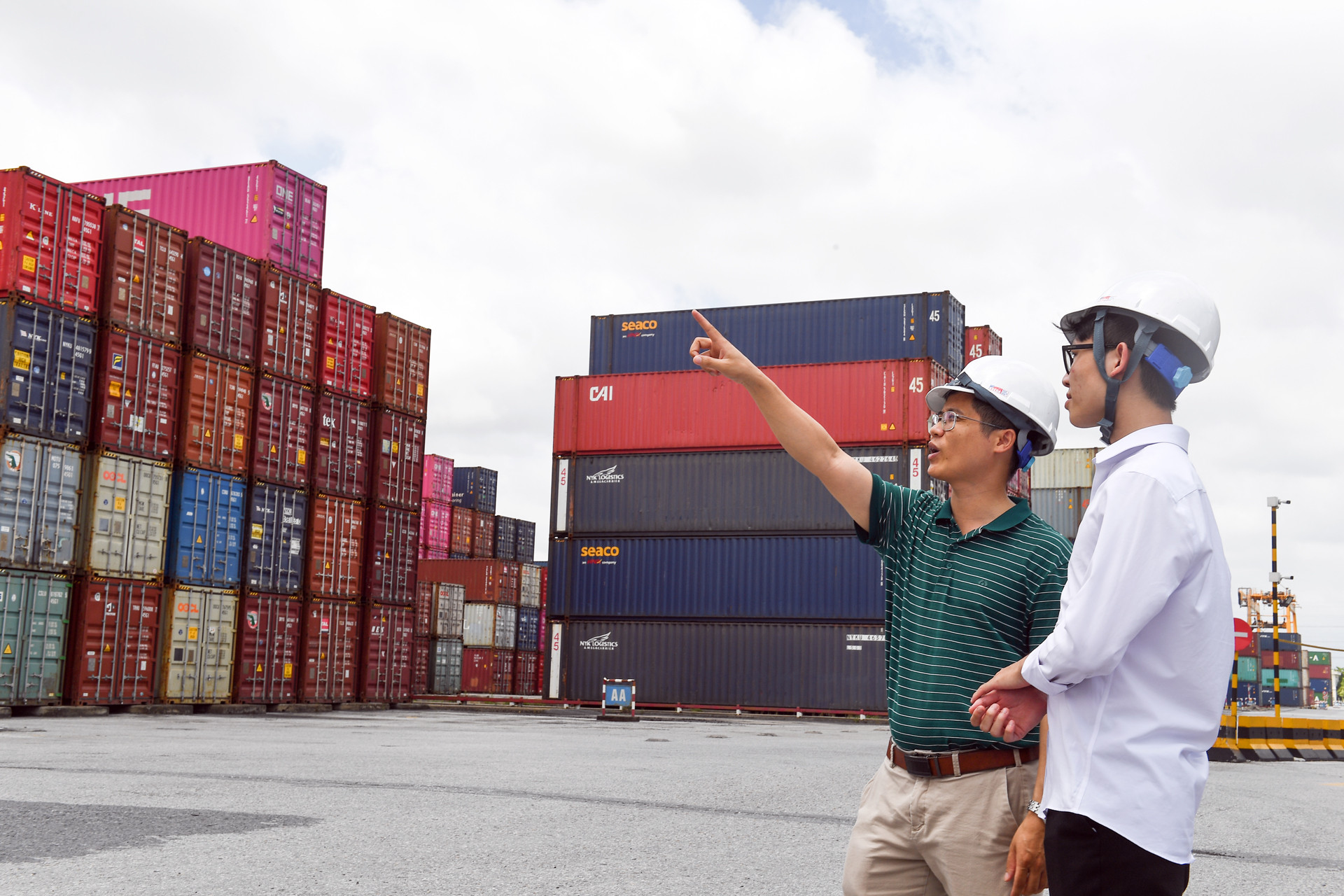
TCreating a framework for fair and transparent competition for businesses will be proof that Vietnam is reforming according to market economy principles. Image: Hoàng Hà
One of the risks is the transshipment of goods. In fact, at the end of 2024, Vietnam's export growth to the U.S. increased by about 29%, and imports from China to Vietnam rose by more than 24%. The U.S. only needs to check the HS codes to identify businesses importing from China to Vietnam and those exporting from Vietnam to the U.S., and they can easily spot it.
So what must Vietnam do? Vietnam will need to be very open and proactive. We must show clearly that we will punish companies engaging in such activities. We need to cooperate with the U.S. to investigate suspicious cases and deal with the offending companies.
This means that Vietnam must behave transparently and decisively. We need to prove that this is not the national policy but rather the actions of a few companies, which are harming the entire economy.
Exports are the main pillar. If we are accused of currency manipulation and not recognized as a market economy, we will immediately be at a disadvantage.
Regarding the market economy status, what internal reforms should be considered?
Dr. Vu Thanh Tu Anh: We need to show the U.S. that we have a transparent monetary policy. For example, exchange rates must fluctuate according to market rules based on supply and demand. Of course, this comes with the risk of losing foreign exchange, but Vietnam must accept this challenge.
|
"We must build trust that we are proactive, ready to cooperate, and transparent with the U.S. government under President Trump." Vu Thanh Tu Anh |
Currently, the technical capacity of the State Bank of Vietnam has greatly improved. I have worked with many leaders at the State Bank, and after many years of experience in management, they have learned valuable lessons.
Improved technical capacity has helped maintain macroeconomic stability. But this is a new game, and we must accept and play it. We must elevate our standards to align with global norms, and only then can we confidently build trust.
Another key issue is reforming state-owned enterprises, which I see as a "two-in-one" approach. The State Capital Investment Corporation has been dissolved. The state-owned conglomerates have far outgrown the oversight of this Corporation, and the Corporation itself has become an obstacle, not a catalyst for development.
I've discussed this with representatives from EVN, PVN, and other large corporations. The State Capital Investment Corporation has been too restrictive. Therefore, by dissolving this entity, we are showing the U.S. that the government is increasing the autonomy of state-owned enterprises, and they are now responsible for their business results.
This means we must create a competitive, fair, and transparent framework for businesses, which will provide clear evidence that Vietnam is reforming in line with market economy principles.
We must build trust with the new U.S. government, showing that we are proactive, ready to cooperate, and transparent with President Trump's administration and its completely new personnel.
What is your view on China, a country that has become an increasingly important trade and investment partner?
Dr. Vu Thanh Tu Anh: China's miraculous development over 15 years, with double-digit growth, allowed them to dominate technologies like chip manufacturing and high-speed rail. They have real internal strength.
When I visited Beijing in 2001, I asked the leaders of the University of Economics at Peking University about their investment in research and development. They told me it was about $500 million per year. When I returned recently, they told me they had allocated $2 billion for research and development.
Strategically, China will continue to be an important trade and investment partner. The trade and investment activities in Vietnam will follow the trend of recent years, with platforms like Temu being examples. However, this is a warning as they face overproduction.
Payments are also a concern, and we must ensure that we do nothing against the core interests of the U.S. in the region and globally.
Moreover, Vietnam has joined many international organizations with a consistent long-standing view of promoting a multipolar, multilateral world. We also need to make it clear that Vietnam does not harm the core interests of anyone.
As you have seen, Vietnam now has a very different position as a strategic partner with many countries. We are peaceful, developing, and responsible to the global community. This is an advantage...
Dr. Vu Thanh Tu Anh: From the conflicts in hot spots like Ukraine and Israel to the lessons from the 1970s, the world wants Vietnam to develop and stabilize for global benefit. They want Vietnam to become strong, independent, and self-reliant.
However, Vietnam must prove to them that we are truly building strategic trust. This is the time to establish that strategic trust.
- Tu Giang, Lan Anh
Related Articles

Modern National Governance: Spreading Wings to Fly with the Cranes
Expert Nguyen Xuan Thanh: The Impact of Global Macroeconomics on Vietnam’s stock market is quite challenging