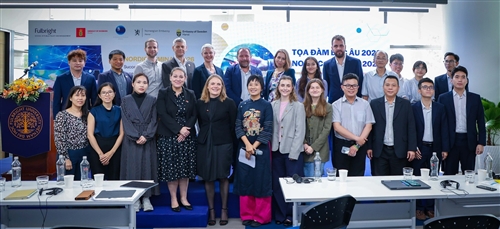
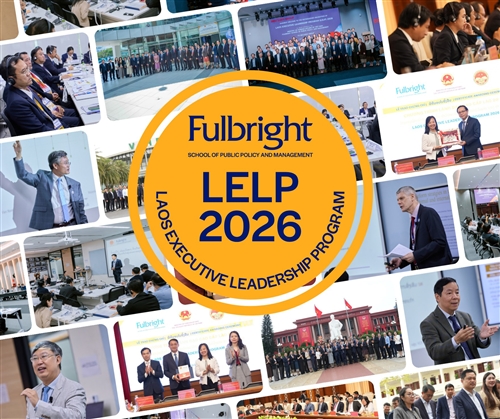
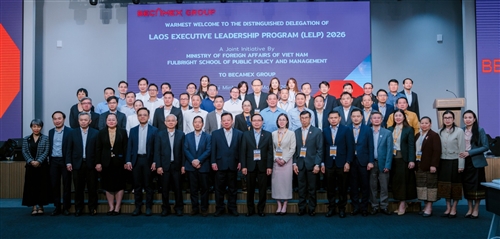
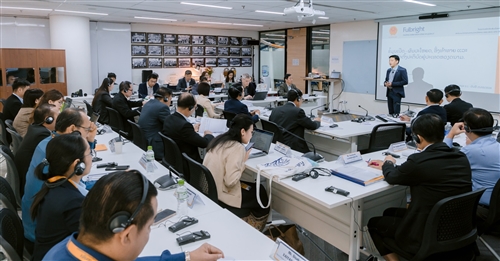
The Laos Executive Leadership Program 2026 (LELP 2026) concluded after six days of intensive engagement (March 23–28, 2026), combining in-depth academic sessions, policy discussions, field studies and local experience sharing. The program marked an important milestone in leadership training cooperation and high-level policy dialogue between Vietnam and Laos. It was jointly implemented by the Vietnam Ministry of Foreign Affairs, the Ministry of Foreign Affairs of the Lao PDR, the Fulbright School of Public Policy and Management (FSPPM), and the Ho Chi Minh National Academy of Politics (HCMA).
LELP 2026 took place at a particularly significant moment, as both Vietnam and Laos had recently concluded their National Party Congresses and entered a new phase of implementing national development strategies. In this context, the program was designed as a premier high-level policy forum, aimed at identifying Laos' key development challenges while contributing to shaping strategic vision, policy direction, and actionable pathways for the coming period.
The composition of the Lao delegation reflected the cross-sectoral nature of policymaking. In addition to senior leaders from the Ministries of Foreign Affairs, Finance, Information Technology, and investment management agencies, participants also included representatives from research institutes, universities, local governments, and the private sector. This diversity ensured that discussions extended beyond theory to address practical policy challenges across different levels of governance.
Speaking at the program, H.E. Mr. Maythong Thammavongsa, Deputy Minister of Foreign Affairs of Lao DPR, emphasized: "Participation in LELP 2026 is not merely a training activity, but an investment in human capital with long-term significance for Laos' development. The program has enabled participants to gain a comprehensive understanding of economic, financial, investment, and digital transformation issues, thereby strengthening the ability to apply theory to practice - especially as Laos implements its Socio-Economic Development Plan for 2026 - 2030 amid new challenges and opportunities."
From the Vietnamese perspective, H.E. Ms. Nguyen Minh Hang, Deputy Minister of Foreign Affairs of Vietnam, noted: "The Laos Executive Leadership Program 2026 is organized shortly after both countries successfully convened their National Party Congresses—Laos with the 12th Congress of the Lao People's Revolutionary Party, and Vietnam with its 14th National Congress—and at a time when both nations are actively and resolutely implementing their development strategies in a new phase. This continues to demonstrate the spirit of 'strategic connectivity' and close cooperation between Vietnam and Laos."
Mr. Nguyen Loc Ha, Standing Vice Chairman of the Ho Chi Minh City People's Committee, also affirmed: "The program is a vivid testament to the special friendship and comprehensive cooperation between Vietnam and Laos. As an economic, financial, and innovation hub, Ho Chi Minh City is expected to continue serving as a key bridge to promote development cooperation between localities of the two countries."
LELP 2026 was financially supported by the U.S. Department of State, alongside the active participation and collaboration of various ministries, agencies, local governments, and partners in Vietnam. This multi-stakeholder coordination contributed to a program that is both academically rigorous and closely linked to real-world policy implementation.
As part of the broader Executive Leadership Program (ELP) series, LELP 2026 builds on over 30 years of experience by the Fulbright School of Public Policy and Management in convening high-level policy dialogue platforms for leaders in Vietnam and the region. Through direct engagement with leading scholars and practitioners, the program provides updates on global economic and political developments while clarifying policy implications at the national level, thereby enhancing strategic vision and analytical capacity for senior leaders. In an increasingly complex and rapidly changing regional and global landscape, initiatives such as LELP serve as platforms for dialogue, knowledge exchange, and the strengthening of strategic ties among nations.
- Uyen Vu
Xem thêm:
Related Articles
From Field Visits to Policy Insights: Local Development Lessons from LELP 2026
From Financial Reform to Digital Transformation: Policy Foundations for Laos' Development through LELP 2026