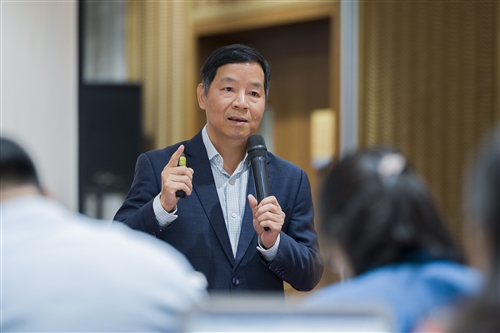
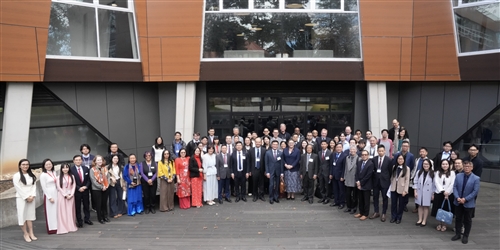
Forty years after the launch of Đổi Mới, a fundamental question has become increasingly urgent: what kinds of institutions and capabilities will Vietnam need for its next stage of development? This question formed part of the broader conversation at Vietnam Update 2026: Vietnam, 40th Anniversary of 'Đổi Mới' and the Era of National Rise, held on 4 September 2026 at the Crawford School of Public Policy, The Australian National University.
The conference brought together scholars and experts from universities and policy institutions in Vietnam, Australia and beyond to examine Vietnam's development trajectory across economic reform, national governance, international relations, green transition, technological innovation, finance and higher education.
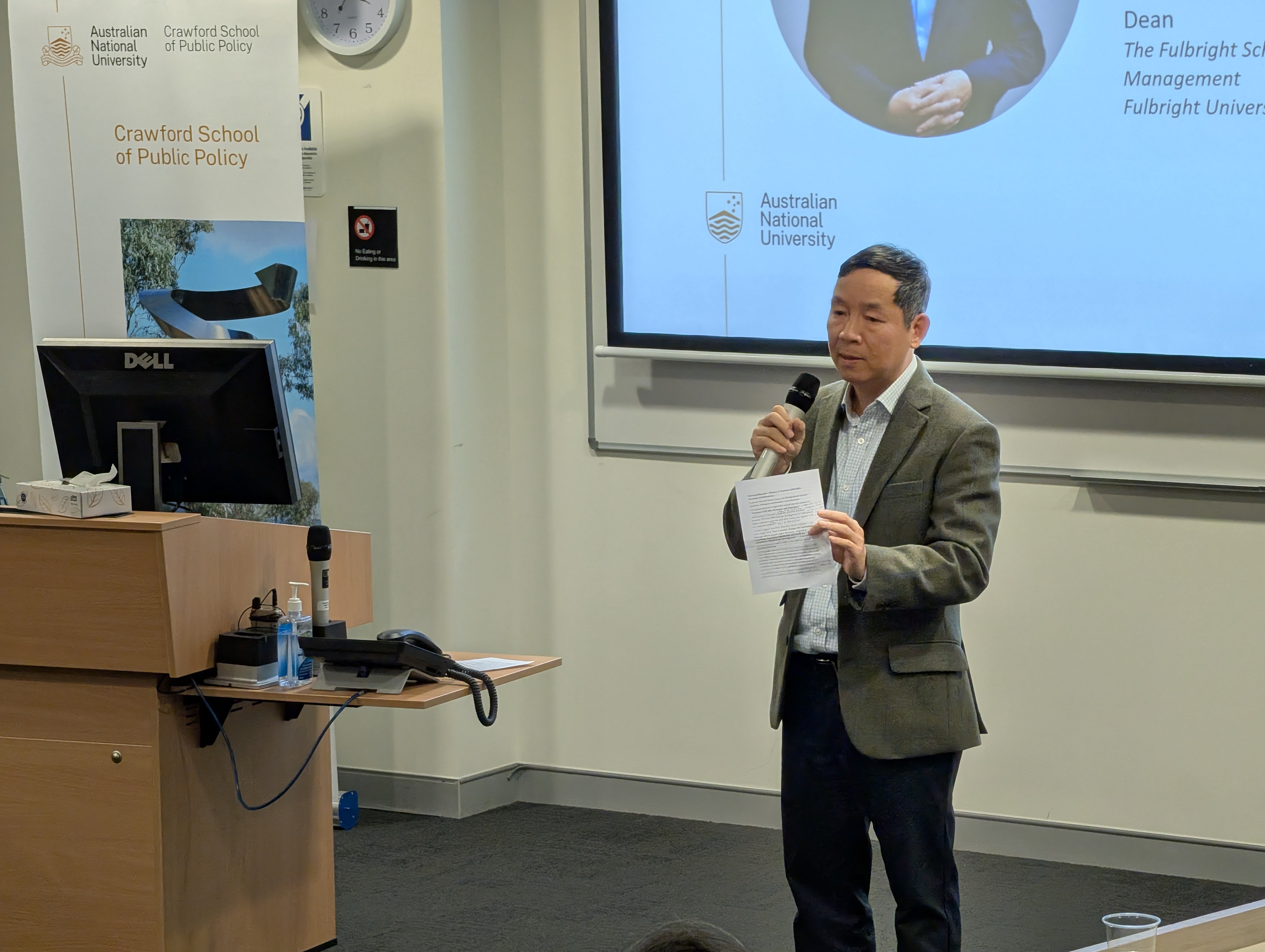
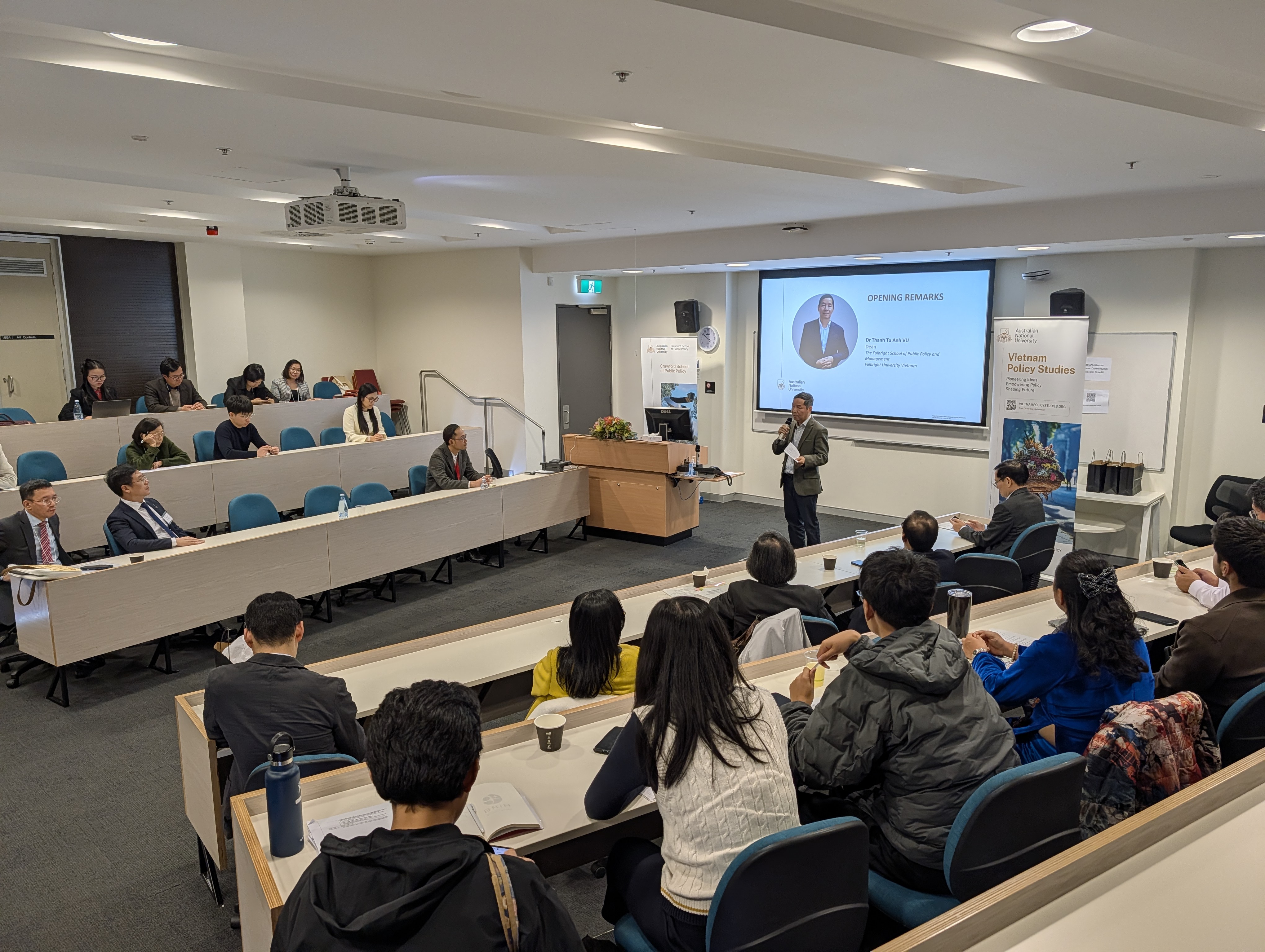
Within this event, Dr. Vũ Thành Tự Anh, Dean of the Fulbright School of Public Policy and Management, Fulbright University Vietnam, opened Plenary 2: Vietnam's Đổi Mới, Economy and Education. He connected two seemingly distinct stories, Vietnam's centrally planned economy before Đổi Mới and the evolution of higher education over the past forty years, as part of a larger question of how institutions change, learn, and build the capabilities needed for development.
Đổi Mới was not one decision, but a process of learning and adaptation
Forty years later, it is tempting to tell the story of Đổi Mới as a decisive policy shift beginning in 1986. A closer reading suggests something far richer than that.
Vietnam's transformation was not simply the result of a single decision or a single master architect. It emerged through a continuing process of policy experimentation, institutional adaptation and learning, from Vietnam's own experience and from the wider world. Before reform was formally recognized, practice was already exposing the weaknesses of existing institutions and revealing feasible alternatives.
The years preceding Đổi Mới illustrate this process particularly clearly. Bottom-up experimentation, often described as fence-breaking, developed alongside partial reform from above. These interacted with deep-seated economic difficulties, intense external pressures and a strong internal political will for change. What followed was not one dramatic breakthrough, but a sequence of turning points, from the crisis of 1985 and the Sixth Party Congress in 1986 to agricultural reform in 1988 and financial and monetary reforms in 1989 and 1990.
The lesson is broader than economic history. Major reforms often begin before they are formally recognized. Practice exposes weaknesses in existing institutions, experimentation reveals alternatives, and effective leadership converts those lessons into policy.
Ideas therefore matter, but their value depends on whether they can be examined critically, tested against reality, adapted to national and local circumstances and translated into effective action.
The next challenge is not autonomy, but capability
This history also offers a useful lens for thinking about Vietnamese higher education.
Over the past four decades, Vietnam has moved from an elite higher education system toward mass participation. Universities have gained greater autonomy, while quality assurance, research, innovation and international engagement have become increasingly important parts of their missions.
But the policy challenge has now changed. The question is no longer simply how to expand access or grant institutions greater formal autonomy. It is whether universities have the governance, people, finance, data, standards and accountability needed to use that autonomy effectively.
It is precisely here that the challenges of economic reform and education intersect.
Đổi Mới demonstrated how changing rules can release initiative and create space for experimentation. Higher education shows why autonomy alone is insufficient. Authority must be accompanied by institutional capability, responsibility and public accountability.
The deeper question is therefore how Vietnam manages the two-way relationship between direction and discretion, control and experimentation, autonomy and accountability.
For FSPPM, education is consequently not simply another sector affected by Đổi Mới. It is part of the institutional infrastructure that makes future reform possible.
Universities educate the people who will govern institutions, manage enterprises, generate knowledge and make difficult public choices. Universities themselves need to become trusted spaces for discussion where evidence can be carefully examined, conventional wisdom questioned and alternative policies considered.
From exchanging knowledge to producing it together
The conference also pointed toward a broader form of academic collaboration. Its value should not end with exchanging ideas at individual events. The ambition should be to move toward jointly producing knowledge, through collaborative research, faculty exchanges and support for young researchers, sharing data and Vietnamese teaching case studies, and stronger connections between research and government, business and society.
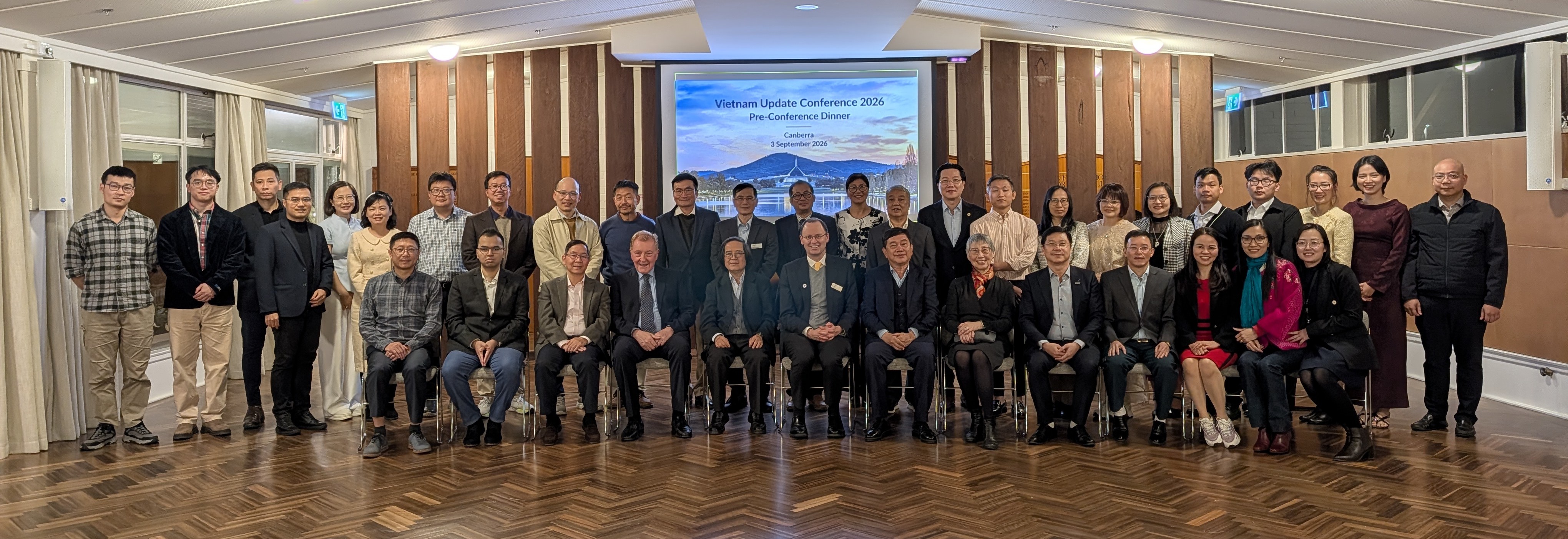
Forty years of Đổi Mới provide much to reflect on. But their deeper value may lie in what they tell us about the future: Vietnam's next stage of development will depend not only on new policies, but on the knowledge, institutional capability and leadership required to make those policies work.
- Uyen Vu
- Photos: ANU
Related Articles
Platforms for Growth? Multinationals, Trade, and Technology Diffusion
Rethinking Energy Security in an Age of Fragmentation