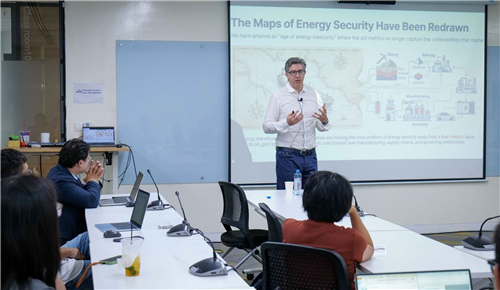
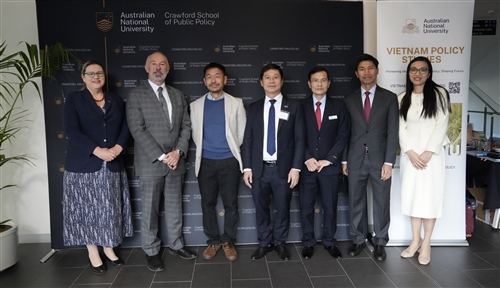
How did Vietnam move from a centrally planned economy facing deep structural crisis to the reforms that came to be known as Đổi Mới? And at what point did the old economic system become impossible to sustain?
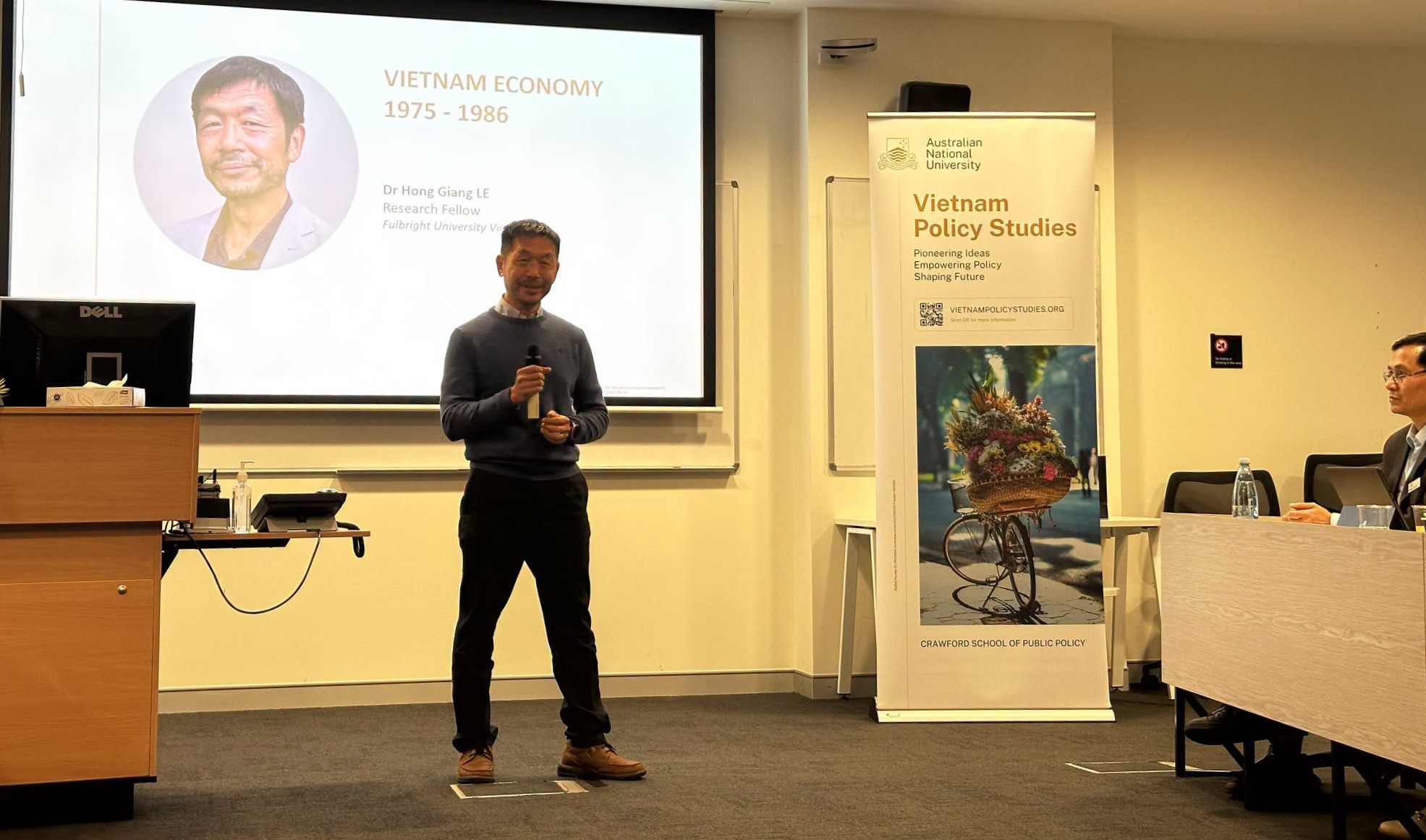
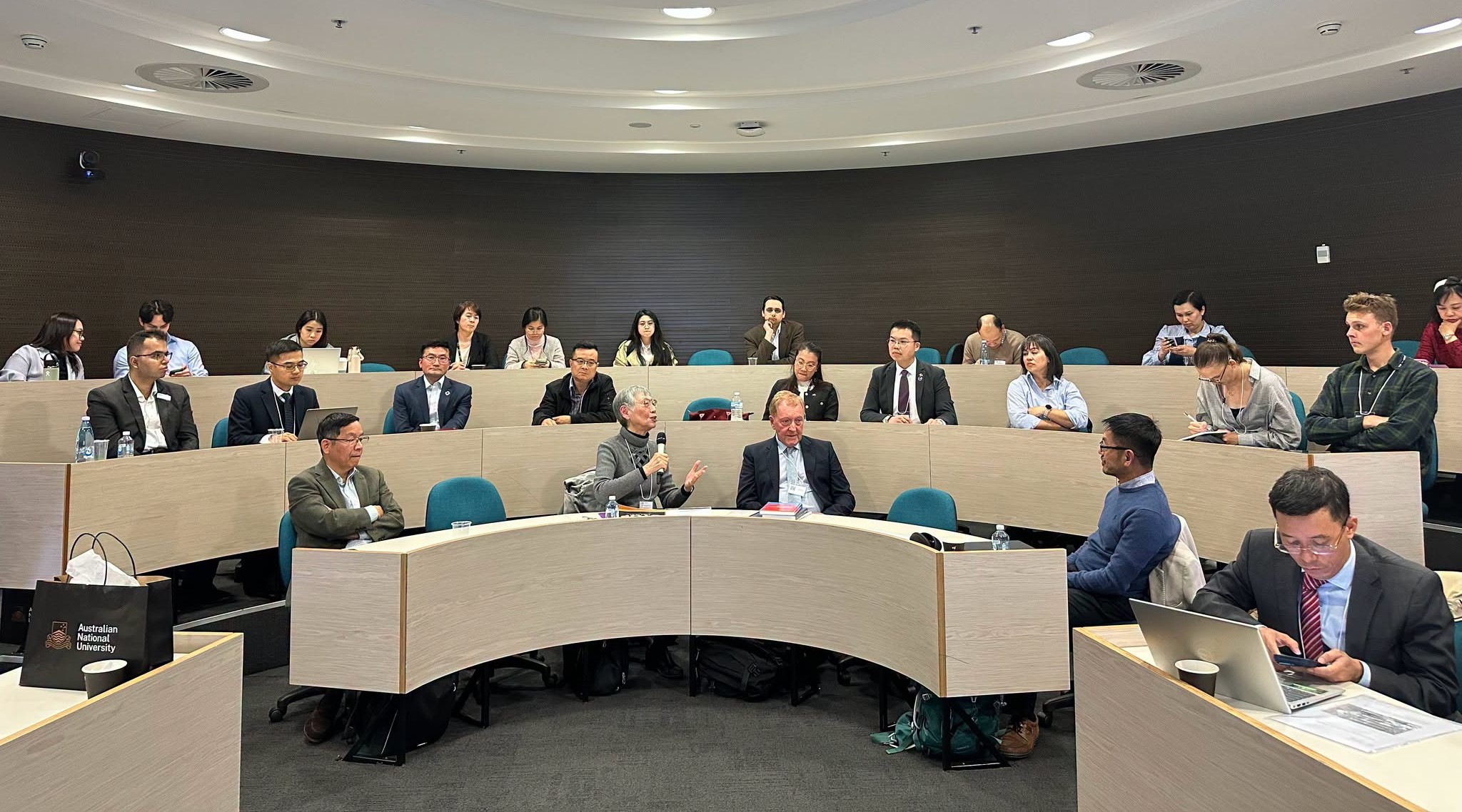
These questions were at the centre of a keynote presentation by Dr. Le Hong Giang, Research Fellow and Lecturer at the Fulbright School of Public Policy and Management, Fulbright University Vietnam, at Plenary 2: Vietnam's Đổi Mới, Economy and Education, part of "Vietnam Update 2026: Vietnam, 40th Anniversary of Đổi Mới and the Era of National Rise". The conference was held on early September 2026 at the Crawford School of Public Policy, The Australian National University.

Understanding the Crisis behind Đổi Mới
In the presentation "Vietnam Economy 1975 to 1986: The mechanism of the centrally planned economy, crisis, and the point of no return leading to Đổi Mới," Dr. Le Hong Giang revisited the decade between reunification in 1975 and Đổi Mới in 1986 to examine how the centrally planned economy entered a profound crisis.
The breakdown of the system was structural rather than simply the result of external shocks.
Following reunification in 1975, Vietnam extended the Soviet-style planning model nationwide despite limited domestic accumulation, major differences between the northern and southern economies, declining foreign aid, embargo, and wars. Material-balance planning centralized decisions over production and inputs while administrative prices, passive credit, and soft budget constraints weakened incentives and prevented prices from signalling scarcity.
Fence-Breaking from Below
By the late 1970s, shortages, declining procurement, underutilized capacity, and fiscal pressures made the official system increasingly unworkable. Local governments, enterprises, farmers, and traders responded through "fence-breaking" (phá rào)—informal contracting, market-price procurement, decentralized trade, and alternative supply networks. Central authorities subsequently legalized parts of these practices through Directive 100 in agriculture and Decree 25-CP for state enterprises, but these "half-reforms" modified operating rules without changing collective ownership, central allocation, soft credit, or monopoly over foreign trade.
The 1985 Price-Wage-Money reform became the decisive crisis. It attempted to rationalize prices, wages, and currency but left deficit financing and the mono-bank system intact, contributing to inflation reaching 774.5% in 1986.
The presentation therefore interprets Đổi Mới not as a single decision or the achievement of one architect, but as the convergence of internal economic failure, Soviet retrenchment, accumulated grassroots experimentation, and political change following Lê Duẩn's death. The true "point of no return" was a sequence: the 1986 political shift, agricultural transformation in 1988, and financial reforms in 1989–90.
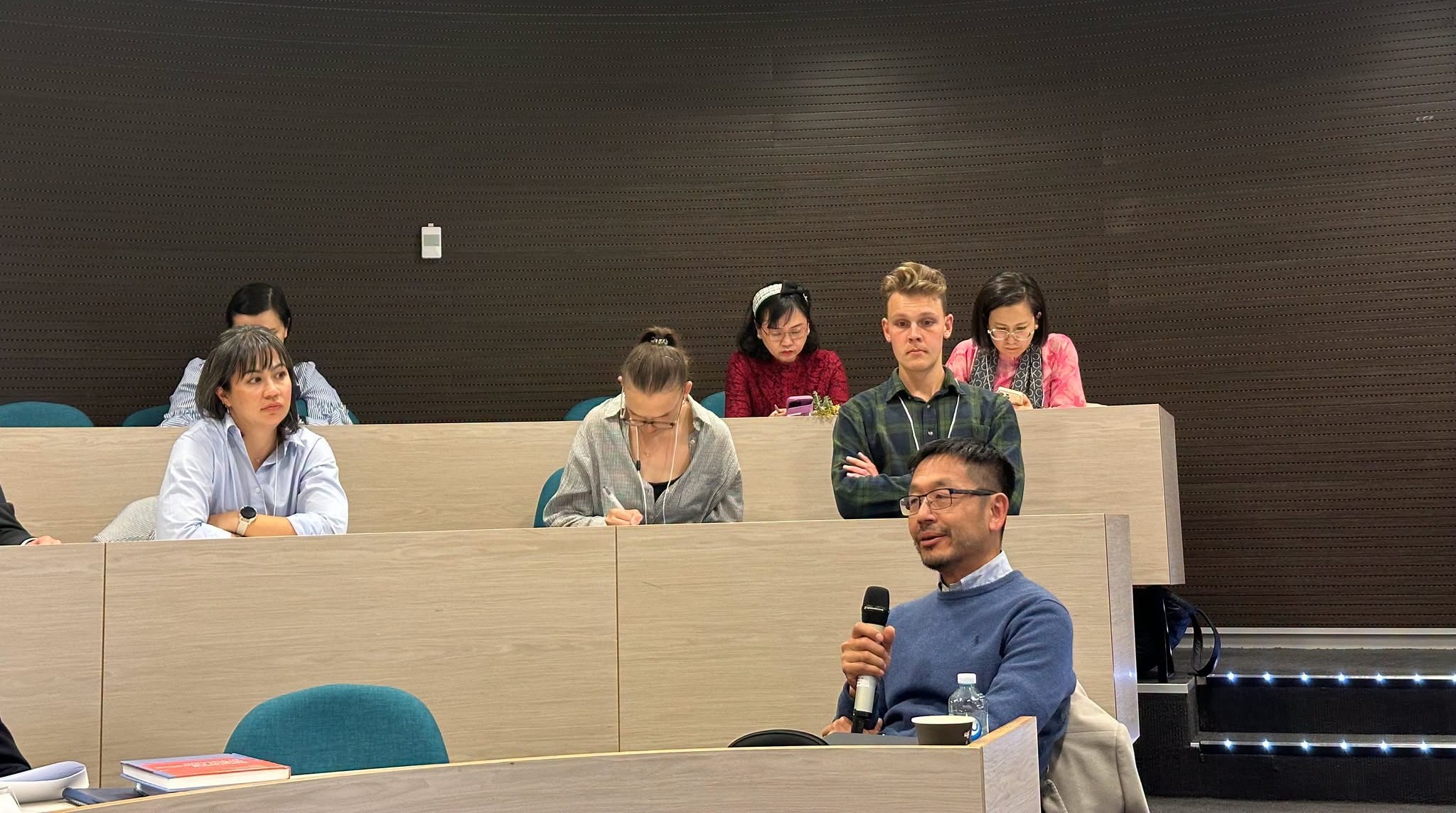
Dr. Lê Hồng Giang's participation in Vietnam Update 2026 forms part of the Fulbright School of Public Policy and Management's regular academic and policy engagement in Vietnam and internationally. Through research, teaching and policy dialogues, FSPPM faculty and researchers contribute to the exchange of knowledge on Vietnam's development, while bringing insights from these conversations back into the classroom and the School's wider learning community.
- Uyên Vũ
Related Articles
Forty Years After Đổi Mới: What Will Drive Vietnam’s Next Transformation?

Platforms for Growth? Multinationals, Trade, and Technology Diffusion